

The global beauty industry is entering its next chapter of growth, but success will increasingly depend on how quickly brands respond to changing consumer behaviour, digital disruption, and evolving routes to market.
According to McKinsey & Company’s State of Beauty 2026 report, the global beauty market is expected to grow by around 5 per cent annually, reaching approximately US$590 billion by 2030. While the outlook remains positive, the report suggests future growth will be driven less by traditional retail expansion and more by innovation, creator-led commerce, premiumisation, and emerging markets.
Here are the seven key trends shaping beauty’s future.
Beauty continues to outperform retail
Despite ongoing economic uncertainty, beauty remains one of retail’s strongest-performing categories. Consumers continue to prioritise products that deliver visible results, support wellbeing, or encourage self-expression.
However, growth is becoming increasingly competitive. Brands that fail to innovate or clearly differentiate themselves are likely to find it harder to maintain market share.
Fragrance is the category to watch
One of the report’s strongest predictions is the continued rise of fragrance. McKinsey expects fragrance to overtake colour cosmetics and become the world’s third-largest beauty category by 2030. Consumers are increasingly viewing fragrance as an accessible luxury, while demand for niche, premium, and personalised scents continues to grow.
For brands, the category presents significant opportunities to build premium positioning through storytelling, exclusivity, and immersive retail experiences.
Social commerce is rewriting the customer journey
Beauty discovery is no longer limited to department stores or online retailers. Consumers are increasingly finding products through creators, influencers, livestreams, and social platforms, with many completing purchases without leaving the app. As discovery and purchasing merge into a single experience, community-building and authentic creator partnerships are becoming just as important as traditional advertising.
Emerging markets will power the next wave of growth
While established markets remain important, much of the industry’s future expansion is expected to come from Latin America, Southeast Asia, and Central Asia. Growing middle-class populations, rising disposable incomes, and wider digital access are creating fresh opportunities across both prestige and mass beauty. For global brands, success will increasingly depend on localised products, marketing, and distribution strategies.
Consumers want proof, not just premium pricing
Today’s beauty consumer is becoming more discerning. Rather than paying more simply because a product is positioned as premium, shoppers increasingly expect evidence of efficacy, ingredient transparency, and measurable performance. Brands that clearly communicate product benefits and consistently deliver results are likely to build stronger long-term loyalty.
AI is reshaping personalisation
Artificial intelligence is rapidly transforming how consumers discover and shop for beauty. From personalised recommendations and virtual consultations to smarter product discovery, AI is creating more tailored shopping experiences. As these technologies become more sophisticated, consumer expectations will continue to rise, making digital capability an increasingly important competitive advantage.
Community will define tomorrow’s beauty leaders
Perhaps the report’s biggest takeaway is that future success will depend on far more than product innovation.
Brands that build engaged communities, deliver seamless experiences across physical and digital channels, and foster authentic relationships with consumers are expected to outperform competitors over the coming decade.
In an increasingly crowded market, emotional connection may become just as valuable as product performance.
What this means for the beauty industry
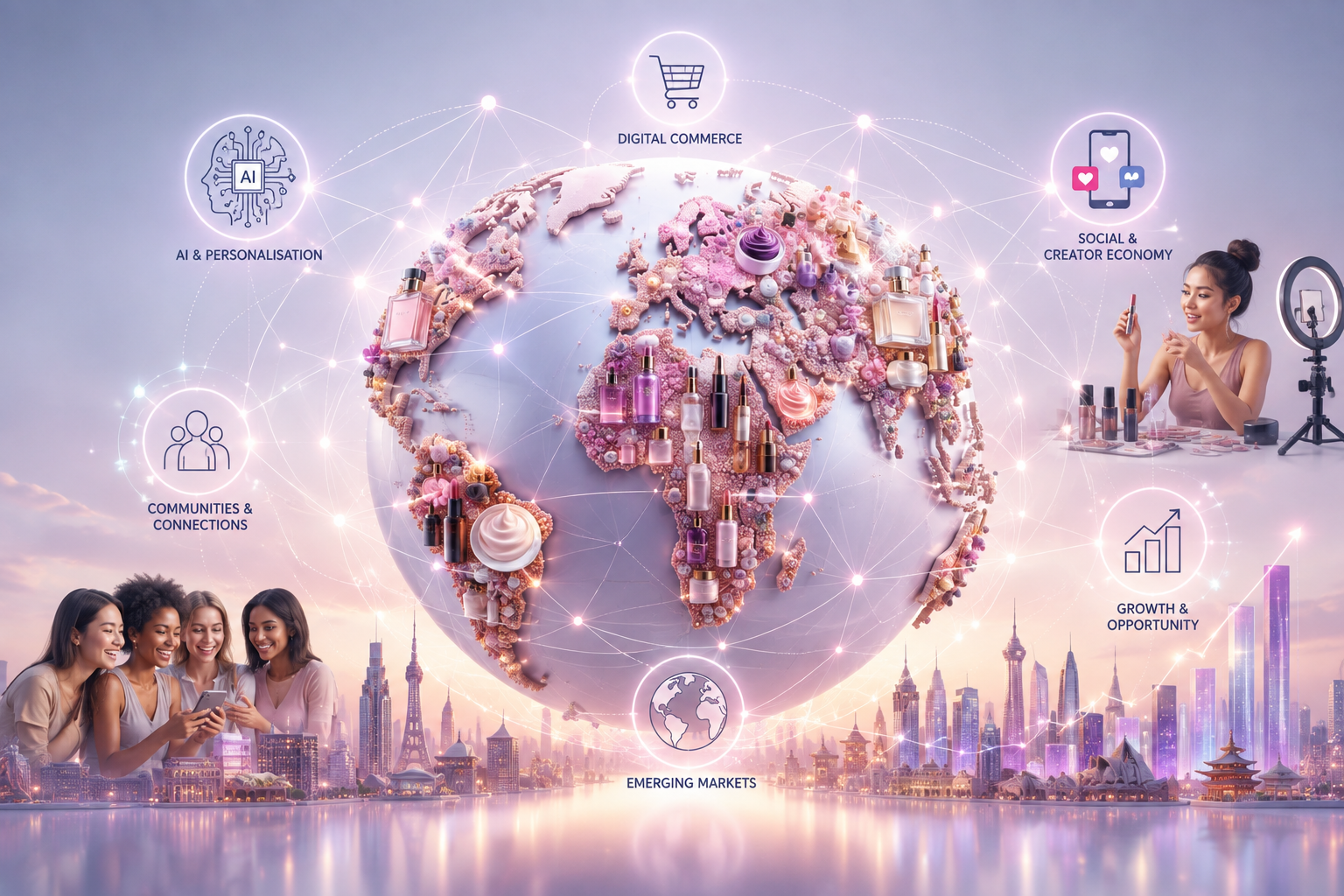
McKinsey’s latest report paints a picture of an industry that remains resilient but is evolving rapidly. Growth will increasingly be shaped by digital commerce, AI-powered personalisation, premium fragrance, creator-led marketing, and the expanding influence of emerging markets.
For salons, retailers, distributors, and manufacturers, the message is clear. The businesses that embrace changing consumer expectations, invest in innovation, and adapt to new technologies will be best positioned to capitalise on the beauty industry’s projected growth through 2030.
