
Over the years, the beauty industry has beautifully evolved to include many, from a diversified shade range in makeup to hair products for many hair types and ailments. While innovation in formulas, textures, and skin science has skyrocketed, packaging accessibility remains decades behind. If you’re a brand reading this, Vidhi Arya from Professional Beauty India urges you to remember, inclusive and accessible beauty packaging is the future and here’s how your brand can help.
For decades, the beauty industry has shaped how we see ourselves, how we care for ourselves, and how we chose to present ourselves to the world. But for millions of people with disabilities, beauty isn’t just self-care, it’s a quietly painful reminder that they are still not a part of the conversation.
Globally, over one billion people live with a disability. This includes individuals with reduced motor function, visual impairment, chronic pain, cognitive disabilities, and age-related limitation. And yet, standard beauty packaging, be it tiny droppers or slippery glass jars, assumes one universal user: someone with full dexterity, full vision, and full strength.
Today, disability access in beauty should be a moral imperative. It should be a design frontier and a competitive advantage. The brands that lead are sure to redefine the category.
Where packaging excludes the everyday struggle
We all know that beauty products are already difficult to open even for the able-bodied. We’ve all been there, fighting a peel-off seal like our life depends on it, or skin! But for someone with arthritis or Parkinson’s disease, a twist cap is annoying and it’s very inaccessible.
Some existing challenges include:
- Small, tightly sealed lids impossible to grip or twist
- Glass packaging that slips easily and breaks
- Fine-print labels unreadable for low-vision individuals
- Pipettes and droppers requiring controlled finger pressure
- Locking pumps designed to prevent spills but not designed to open easily
- Unclear tactile differentiation as moisturiser and cleanser feel identical in packaging, creating anxiety for blind users
What inclusive and accessible beauty packaging could look like
Inclusive design doesn’t mean medicalised, dull, or bulky. It means thoughtful. It means intuitive. And most importantly, it benefits everyone, not just disabled customers. This is the essence of universal design.
Here are meaningful solutions the industry must explore:
1. Ergonomic shapes with strong grip support
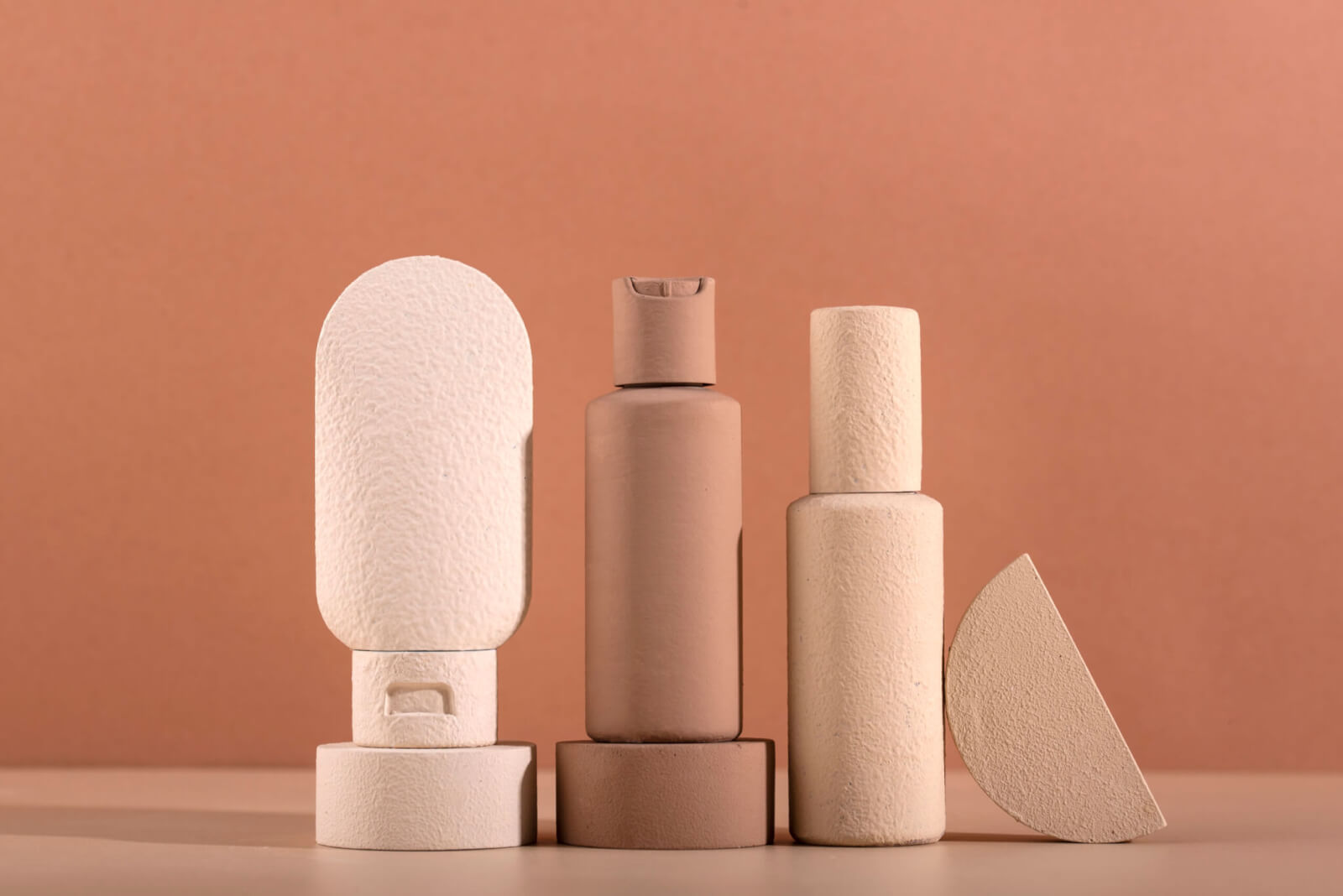
Textured sides, silicone sleeves, and flattened panels prevent slipping. This is especially important for tremors or weak grip strength. Think less “smooth and slippery luxury glass,” more “stable, effortless-to-hold design.”
2. Easy-open caps and magnetic closures
Snap lids, flip caps, and magnetic closures eliminate the need for twisting. Brands like Fenty Skin and Rare Beauty have already proven that accessibility and aesthetics can coexist.
3. Pump and button-based dispensing systems
Airless pumps, one-touch dispensers, or squeeze systems provide controlled product release without requiring strength or precision.
4. Tactile and braille labelling
Raised markings, embossed identifiers, and braille ingredient lists, when thoughtfully applied, drastically increase independence for visually impaired consumers.
5. Colour-coded or contrast printer information
Bold contrast printing (dark on light or vice versa) supports low-vision users and age-related disability without changing the brand’s visual identity.
6. Refill systems that work with limited mobility
Refills shouldn’t require wrestling a bottle apart. Cartridge-style slide-ins or snap mechanisms are the future.
Inclusivity requires a mindset shift
This means widening the lens of design to include:
1. Accessible unboxing experiences, where packaging layers are easy to open, instructions are clear and tactile or audio-integrated, and the user doesn’t struggle with plastic seals, tight caps, or excessive wrapping.
2. Adaptive tools and applicators, such as ergonomic brushes, flexible applicator handles, spoon scoops for jars, or one-handed pump mechanisms. And, we are not talking special editions. They should be built into the core product assortment, because accessibility should simply be foundational.
3. Representation in marketing and product testing. Accessibility improves only when the people it affects are part of the conversation. Featuring disabled consumers in beauty campaigns is visibility; involving them in R&D, focus groups, and usability testing is transformation. When disabled people are co-designers rather than just end users, the product experience becomes genuinely inclusive.
4. Multi-format customer support, including video demonstrations with captions, voice-based instruction guides, text alternatives for those who cannot hear or see videos, and customer care teams trained to support diverse communication needs.
5. Universal packaging standards backed by policy, including tactile markers, minimum font legibility rules, or accessibility certifications for beauty products. Regulations can create consistency, but industry leadership must first set intent.
Just as shade ranges evolved from token inclusivity to a non-negotiable standard, accessibility must follow the same trajectory and faster. The brands that build accessibility into their systems, not just their packaging, will redefine not only who beauty is for, but what beauty means.
Why inclusive and accessible beauty packaging matters more than ever
Beauty is deeply emotional. It’s autonomy, dignity, and self-definition.
For someone who uses a product designed for their body’s needs, not in spite of them, that experience becomes transformative:
- A tube that opens easily isn’t just packaging — it’s independence.
- A bottle with Braille isn’t just printed text — it’s belonging.
- A pump that dispenses with one hand isn’t just convenient — it says:
You were considered. You matter.
The call to action to take this from ideal to industry standard
We’re at the beginning of a long-overdue shift, but the direction is clear: inclusive design will be the defining hallmark of future-forward beauty brands.
Accessibility isn’t charity.
It isn’t niche.
It isn’t optional.
It’s design excellence.
So, surely brands that embrace inclusive packaging will win new consumers, but more importantly they’ll also redefine what beauty stands for:
So remember the mantra:
Beauty that: includes, not excludes. Empowers, not limits. Beauty for every body, literally!
