

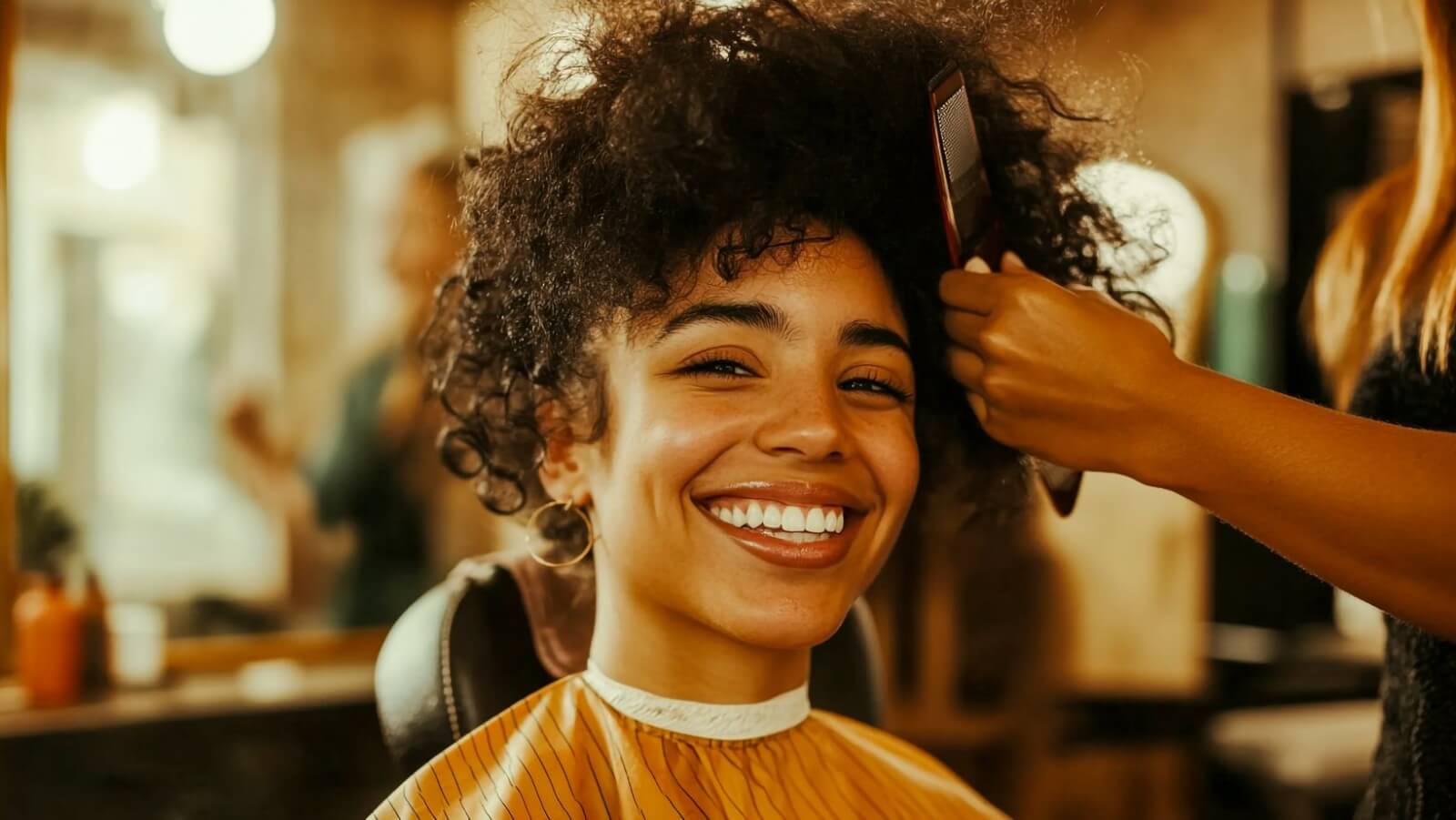
Textured hair has been long ignored, tamed, and transformed, but the landscape is surely changing. Now, more clients demand services tailored to their unique hair texture. In the wake of this change, in a candid conversation with Vidhi Arya, Jay Pawar, Chief Training Officer, Rawls Wellness Pvt Ltd. Highlights what the industry needs to acknowledge.
For decades, India’s salon industry has worked around textured hair: straightening it, smoothing it, or simply sidelining it. But according to hair expert Jay Pawar, this wasn’t because textured hair didn’t exist in sight. “Textured hair has always existed in India. It was just never acknowledged as a specialization,” he says. “The industry historically leaned towards Eurocentric beauty standards, where straight, smooth hair was considered ‘ideal’.”
That bias didn’t just shape beauty ideals, it influenced education, services, and even business models. Pawar points to three key reasons behind the delay in embracing texture. “Most foundational training focused on straight hair cutting and chemical smoothing,” he explains. Add to that a strong commercial push: “services like rebonding, smoothening, and keratin became high-revenue drivers, pushing salons to ‘alter’ rather than ‘understand’ texture”, and the lack of a tailored product ecosystem for Indian conditions, and the gap becomes clear.
Today, however, the shift is unmistakable. “With global exposure, social media awareness, and consumer education, textured hair is finally being celebrated instead of corrected,” Pawar notes.
A New Kind of Client, A New Kind of Consultation
The change is visible not just in trends, but in what clients are asking for. Textured-hair clients are walking into salons with a distinct set of concerns. Jay enunciates some: “Frizz and dryness, lack of definition, uneven curl patterns, excessive bulk or triangle-shaped haircuts, damage from past chemical services, and difficulty managing hair daily.”
But what truly sets them apart is not just the problem set. It’s the process required to address it. “Consultation for textured hair is fundamentally different,” Pawar emphasizes. “It must be lifestyle-driven, not just style-driven.”
Unlike conventional consultations, this approach demands a deeper diagnostic lens. “It requires understanding curl pattern, porosity, density, and shrinkage. It needs a dry hair analysis, not just wet consultation,” he explains. And beyond the chair, the responsibility extends into education: “It must include home-care education and product prescription. Visual expectation setting is critical because shrinkage can alter final length.”
“In short, textured hair consultation is diagnostic + educational, not just visual.” he adds.
Where Stylists Are Still Getting It Wrong
Despite growing awareness, Pawar believes the industry is still in transition. “This is one of the biggest industry gaps,” he says candidly.
The mistakes are often technical but rooted in a larger mindset issue. “Cutting textured hair wet and expecting accurate results, over-thinning or using razors incorrectly, ignoring natural fall and movement, treating all curls the same, and over-recommending smoothing or straightening services: these are all very common errors.”
At the heart of it lies a fundamental question of intent. “The mindset has been: ‘How do I control this hair?’ instead of ‘How do I enhance this texture?’”
That mindset, he believes, is slowly evolving, but not fast enough. “Many salons still try to fix textured hair because it feels safer and more predictable commercially. But the shift has begun. Clients today are demanding authenticity.”
Rewriting the Rulebook
To truly serve textured hair, stylists need to rebuild their foundation from the ground up. Pawar outlines what that should look like in practice.
“Every stylist must master technical understanding: curl pattern classification, porosity and moisture behavior, shrinkage science, and sectioning based on natural fall, not symmetry.” Cutting, too, requires a rethink: “Dry cutting or curl-by-curl cutting, minimal tension cutting, and shape building instead of bulk removal is the need of the hour.”
Equally important is product literacy. “Stylists need to understand sulphate-free vs moisture-rich formulations, protein vs hydration balance, and layering of leave-ins, creams, and gels.”
And then comes styling—the part clients experience most immediately. “Diffusing techniques, finger coiling or scrunching, and frizz control without adding weight.”
But beyond all of this, Pawar circles back to philosophy. “Most importantly, stylists must shift from control-based styling to behavior-based styling.”
The Business Case for Texture
While the creative argument for textured-hair expertise is compelling, the commercial one might be even stronger. “Absolutely, and it’s a massive one,” Pawar says when asked if salons are missing out on an opportunity.
“Textured hair clients are highly loyal when they find the right stylist. They’re open to premium services and retail, and they’re more dependent on professional guidance.”
This translates into tangible revenue streams that many salons are currently overlooking. “Curl-specific haircuts with premium pricing, hydration rituals and repair treatments, styling education sessions, and retail: from leave-ins and curl creams to gels and diffusers.”
In fact, Pawar estimates that “a textured-hair client can generate two to three times higher lifetime value than a regular haircut client.”
His conclusion is clear: “This is not a niche! This is an untapped majority market in India.”
Rethinking Education, Rebuilding the Industry
For this shift to be sustainable, change must begin at the education level. Pawar is unequivocal about what needs to evolve.
“Textured hair should not be an ‘advanced module’. It should be part of foundation training,” he asserts. Beyond theory, exposure is key: “Live models with different textures, not mannequins with uniform hair.”
Assessment systems, too, need an overhaul. “Stylists should be certified based on consultation quality, texture understanding, and finish and styling—not just haircut.”
And perhaps most importantly, the mindset must be reprogrammed. “We need to shift from ‘correction services’ to ‘enhancement services.’”
Ongoing learning will be crucial to sustaining this momentum. “Monthly workshops, digital learning, and trend updates must become part of salon culture,” he says, adding that product and retail training should empower stylists to “confidently prescribe routines, not just perform services.”
The Future Is Inclusive
For Pawar, the rise of textured hair isn’t a passing trend, it’s a long-overdue correction. “Textured hair is not a trend—it’s a reality we ignored for too long.”
And as India’s beauty industry evolves, the salons that adapt will do more than just keep up—they’ll lead. “The future of the Indian salon industry lies in inclusivity, customization, and technical depth,” he says. “The salons that invest in textured-hair expertise today will not just lead creatively, but also dominate commercially.”
