


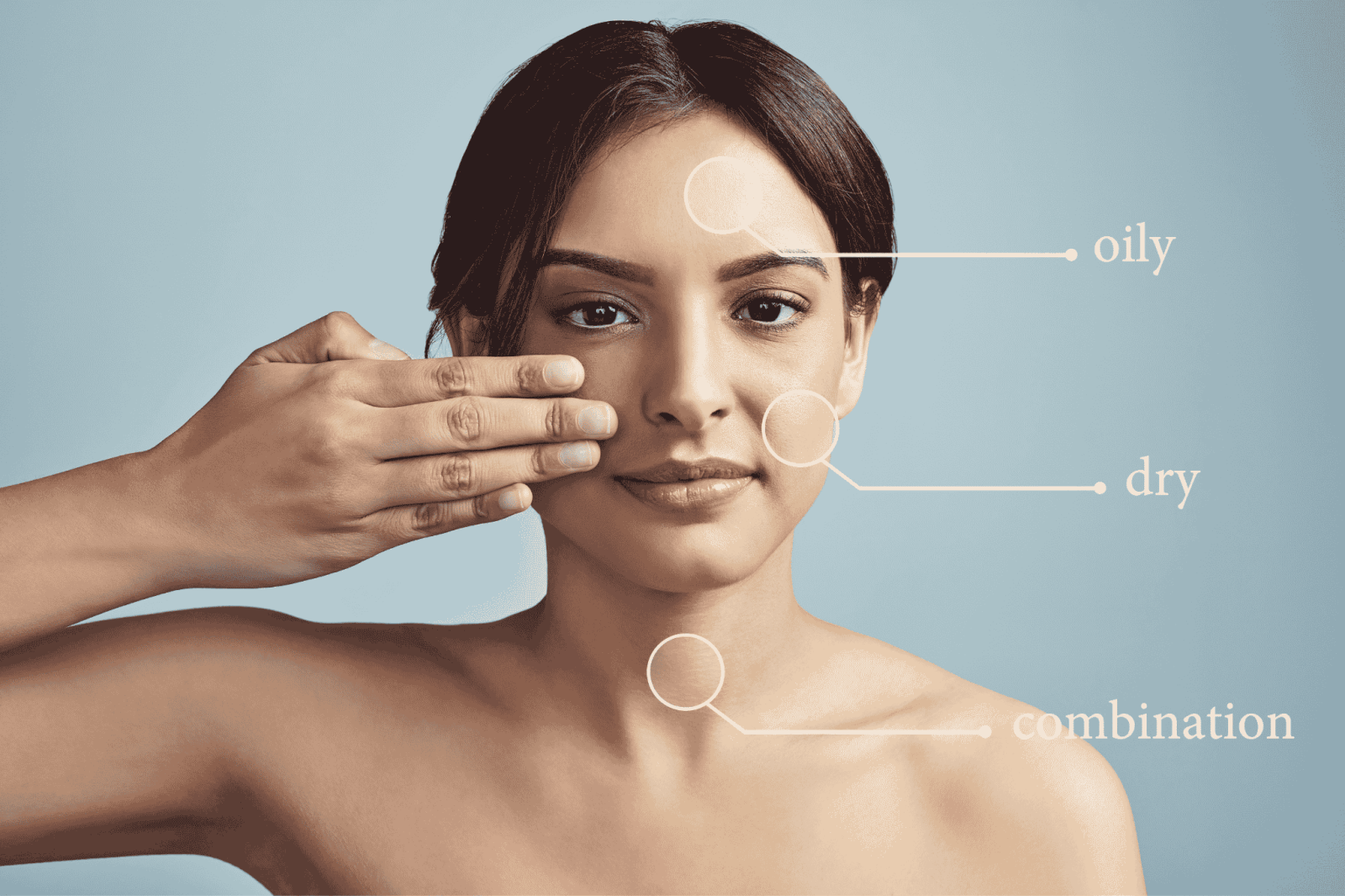
The choice paralysis while reading the menu at a fancy dinner may still be less daunting than choosing what skincare to buy for your goals. Too many platforms, too many recommendations, just not enough to know what suits you best personally.
What Are the Different Skin Types?
Understanding your skin type is the first step to building a skincare routine that actually works. Below are the five main skin types and how to identify which one you have.
Oily Skin
If you’ve given up on wearing highlighter because your face provides its own, uninvited, your skin is almost certainly producing more sebum than it needs to. Sebum is the skin’s natural oil, and it is the excess of it that makes your face appear greasy.
Key characteristics:
- Shiny or greasy appearance, especially by midday
- Prone to acne, blackheads, and clogged pores
- Enlarged or visible pores
- Makeup tends to slide off or fade faster
Dry Skin
When you can trace a faint map of flaky patches across your forehead and cheeks every morning, you almost certainly have dry skin. In the medical world, it is known as xerosis or xeroderma.
Key characteristics:
- Rough, flaky, or scaly patches on the face and body
- Skin feels tight, especially after cleansing
- Itching or a sensation of discomfort
- Dull complexion due to a lack of moisture
Combination Skin
This skin type is characterized by some areas of the skin, like the cheeks, being dry while others, particularly the T-zone, are oily. However, it varies from person to person.
Key characteristics:
- Oily T-zone, forehead, nose, and chin
- Dry or normal cheeks
- Most likely to shift with seasonal changes
- Sensitive to internal changes like stress and hormonal fluctuations
Normal Skin
Normal skin is not characterized by oily or dry patches; instead, the skin feels hydrated and comfortable with an overall balanced look. It maintains a clear, even complexion with small pores and healthy elasticity.
Key characteristics:
- Well-balanced hydration levels
- Intact skin barrier with small, barely visible pores
- No significant concerns like acne, greasiness, or flakiness
- Occasional breakouts or dryness may arise due to hormonal fluctuations, environmental changes, or diet and stress
Sensitive Skin
If a product works beautifully for a week and suddenly turns on you for no clear reason, and your skin goes from calm to irritated overnight, sensitivity and a compromised barrier are usually behind it.
Key characteristics:
- More reactive to certain ingredients, substances, and environmental triggers
- Prone to redness, burning, or stinging after product use
- Easily aggravated by harsh soaps, astringents, fragrances, and cold weather
- People with any skin type can experience temporary sensitivity when exposed to an allergen or irritant
How to Find Out Your Skin Type at Home
Not sure which skin type you have? The two most commonly used at-home tests to help determine skin type are:
- The Bare Face Test
- The Blotting Paper Test
The Bare Face Test
The most commonly used and trusted test, which determines your skin type based on how your skin feels after cleansing. Follow the steps below to conduct it:
Step 1. Use a suitable cleanser on your face and pat your skin dry with a clean napkin. Do not apply any further skincare products like toner, serum, or moisturiser.
Step 2. Wait 30 to 45 minutes and avoid touching your face before checking.
Step 3. Observe how your skin feels and appears:
- If your skin feels tight, looks flaky, and rough, it is dry.
- If your face has a shine and looks greasy, your skin is oily.
- If only the T-zone, that is, the forehead, nose, and chin, is shiny, while your cheeks are normal and non-greasy, it is a combination skin type.
- If your face has no oil patches or flakes and feels balanced, you have normal skin.
The Blotting Paper Test
This test visually confirms the presence of oil production on your skin. Follow the steps below to conduct it:
Step 1. Use a suitable cleanser on your face.
Step 2. Take clean blotting papers and gently press them on your face.
Step 3. Hold the blotting papers against the light to check for oil markings.
Step 4. The markings indicate:
- If there are no oil markings on the sheet, you have dry skin.
- If there are excessive oil markings, your skin is oily.
- If the sheet from the T-zone is translucent, that indicates combination skin.
- If there are small amounts of oil markings uniformly across the sheet, your skin is normal.
How to Test for Sensitive Skin
To find out if you have sensitive skin, perform this simple at-home patch test:
Step 1. Apply the new product you want to test to the inside of your forearm or behind your ear.
Step 2. Leave it on for 24 hours and do not wash it off.
Step 3. If you experience any redness, itching, or burning, your skin is likely sensitive.
Why Knowing Your Skin Type Matters
Understanding your skin type is very important in building an effective skincare routine. Whether you have oily, dry, combination, normal, or sensitive skin, knowing your skin type helps you choose the right products, address your specific skin concerns, and avoid ingredients that do more harm than good. Whether you have identified with one type clearly or found yourself somewhere in between, you are still building something.