

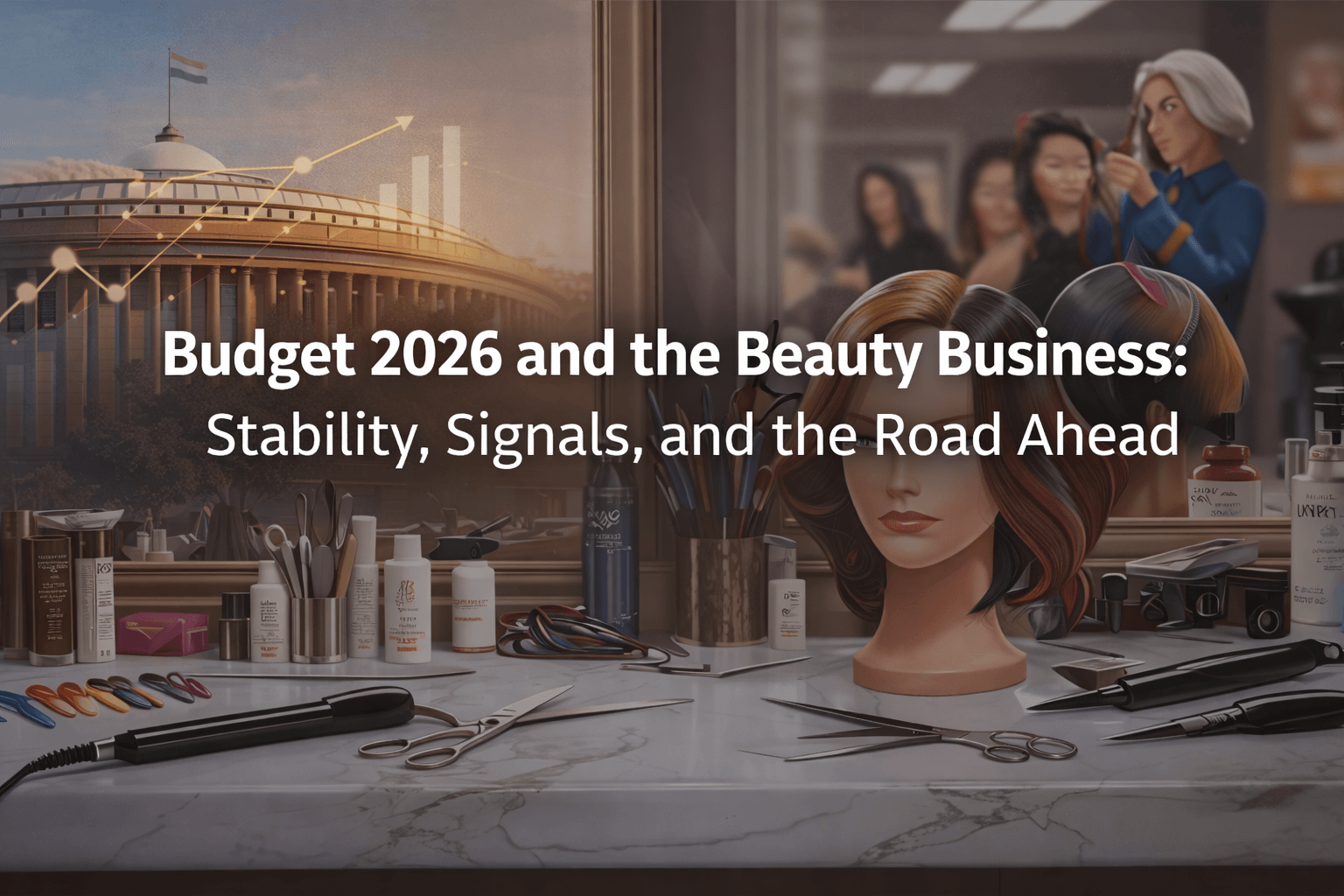
The Union Budget 2026, presented by Finance Minister Dr. Nirmala Sitharaman, maintains a status quo approach for the beauty and wellness sector—signalling market maturity and policy neutrality rather than neglect. Priyanka Parshurami speaks to industry leaders to capture a sentiment of cautious optimism, highlighting a sector driven by consumer demand, premiumisation, professional training, and innovation over fiscal incentives.
The Indian beauty and wellness industry has traditionally remained outside the immediate focus of government policy, largely due to its fragmented nature and absence of a unified representative body. However, in the post-pandemic era, increased professionalisation, organised growth, and rising economic contribution have gradually brought the sector into wider policy conversations.
The Union Budget 2026, presented by Finance Minister Nirmala Sitharaman, does not announce any direct allocations, tax reforms, or regulatory changes specifically for beauty, cosmetics, salons, or wellness services. For many industry leaders, this absence reflects no neglect, but stability as an indicator of a sector increasingly driven by consumption, innovation, and skill rather than subsidies.
Broader budgetary themes such as MSME support, skilling initiatives, women entrepreneurship, startup credit access, infrastructure development, tourism, and healthcare ecosystem strengthening are expected to indirectly benefit salons, spas, aesthetic clinics, academies, and D2C beauty brands.
Views of industry leaders
Mahesh Ravaria, Executive Director, Beauty Garage Limited
From a policy expectations standpoint, Mahesh Ravaria notes that while the sector is poised for growth, focused incentives could accelerate scale. “Prioritising infrastructure development and supply chain enhancements would encourage MSMEs to expand operations and access global markets,” he stated, adding that rationalised customs duties, GST corrections, and clearer ‘Make in India’ pathways would enable domestic brands to invest more confidently in R&D and future-ready technology.
Samir Srivastava, CEO, Looks Salon
From an organised salon perspective, Samir Srivastava emphasises that policy continuity itself is a growth enabler. “Stability in taxation and a sustained focus on consumption and infrastructure create a predictable environment for long-term investments,” he explains. Skilling and MSME-led initiatives, he adds, directly strengthen the salon industry’s human capital pipeline, enabling better-trained teams, stronger partner networks, and scalable growth.
Vikram Bhatt, Co-Founder and Director of Growth and Strategy, Enrich Salon
Echoing this, Vikram Bhatt highlights that Budget 2026’s macroeconomic stability, emphasis on women entrepreneurship, and expanded skilling initiatives create a supportive ecosystem particularly for brands expanding into Tier-2 and Tier-3 markets. Improved access to finance and compliance ease, he notes, will ultimately elevate workforce quality and optimise training costs.
Rayed Merchant, Director, SSIZ International and Beauty Palace
On the imports and brands front, ongoing India–EU trade discussions present a significant long-term opportunity. Rayed Merchant believes a balanced trade agreement could create a more predictable import environment. “Lower duties, aligned regulatory standards, and simpler compliance processes would make premium European beauty products and professional tools more accessible, while reducing costs and lead times,” he says.
Tejas Bhatt, Director, Absolute Beauty Concepts Pvt. Ltd.
Similarly, Tejas Bhatt views the India–EU FTA as a potential structural shift. “Tariff reductions will expand access, but regulatory alignment will be the real catalyst unlocking a broader portfolio of high-end European formulations as India’s beauty market moves steadily towards the USD 40 billion mark.”
While Budget 2026 may not introduce sector-specific incentives, its emphasis on stability, skills, and global trade alignment reinforces a predictable environment allowing India’s beauty and wellness industry to continue evolving through market-led growth and professional maturity.
