
For beauty professionals, eyebrow shaping is not a routine service, it is a technical skill that combines facial analysis, proportion mapping, and controlled execution. Vidhi Arya shares the various facets of shaping and maintaining eyebrows.
A well-shaped brow can change the way the face looks. A few considerations can change the way the client looks and feel. Eyebrows should enhance bone structure, correct visual imbalances, and align with the client’s natural growth pattern, rather than override it.
The modern approach must prioritise customisation over standardisation.
Brow Mapping: Establishing Technical Accuracy
Before any hair removal, mapping is essential to ensure structural balance:
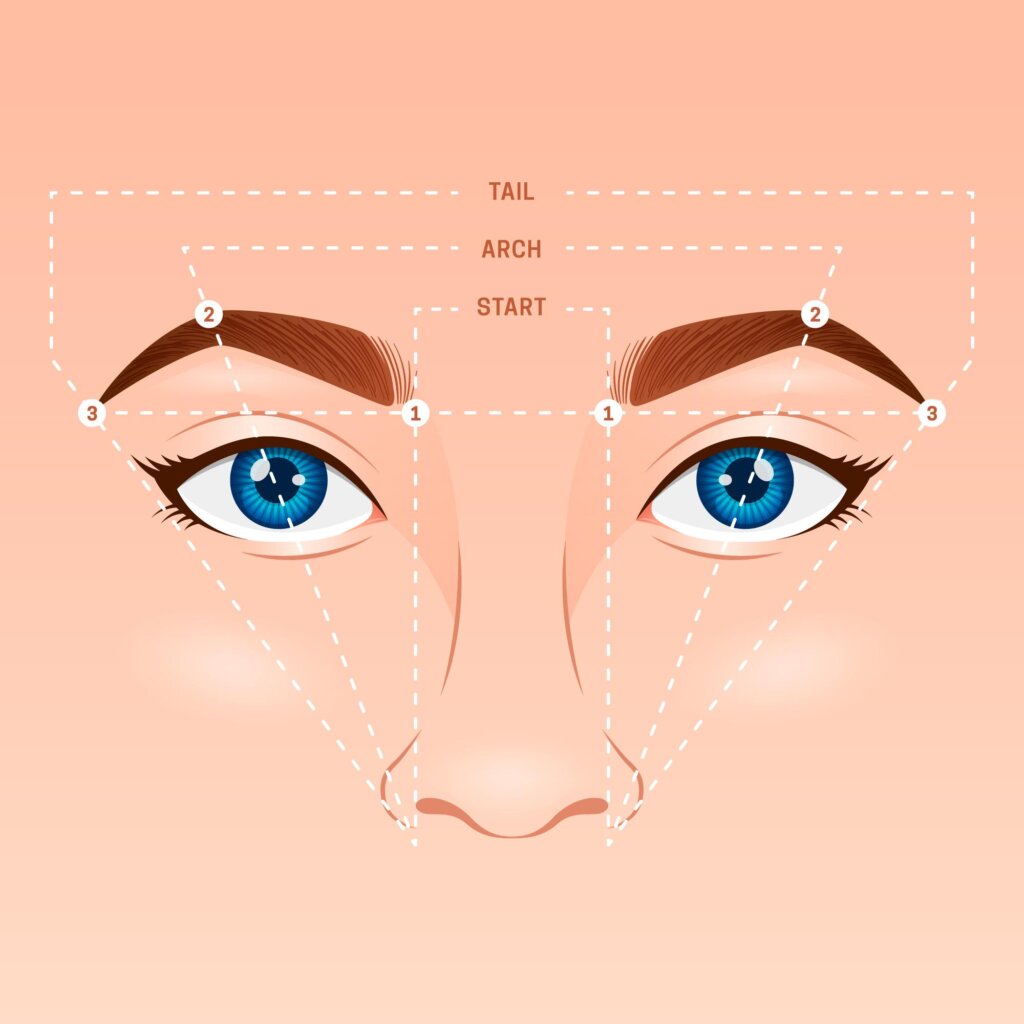
- Start Point (Head):
Align vertically with the ala (side) of the nostril
This prevents overcrowding or excessive spacing
- Arch Point (Apex):
Typically aligns with the lateral edge of the iris
This determines lift and facial definition
- End Point (Tail):
Extends from nostril to outer canthus
This should taper cleanly without descending below the head
Professional note: Always adjust mapping slightly based on asymmetry. Remember that strict formulas should guide, not dictate.
Face Shape Adaptation
Customisation is critical when designing brow shapes:
- Oval: Maintain natural soft angles; minimal restructuring
- Round: Introduce a higher apex to create elongation
- Square: Soften with a diffused arch to counter strong jawlines
- Long/Rectangular: Keep brows flatter to reduce vertical emphasis
- Heart-shaped: Opt for softer curvature to balance a broader forehead
Key principle: Avoid overcompensation and opt for subtle corrections that yield more sophisticated results.
Managing Density and Distribution
Brow density should be controlled, not reduced indiscriminately:
- Preserve fullness at the head for a natural gradient
- Build definition at the arch without over-thinning
- Ensure a clean, tapered tail
- Avoid uniform thinning across the brow
Observation skill: Assess hair growth direction, density gaps, and follicle strength before shaping.
Technique Selection: Method Matters
Choosing the right technique impacts both finish and skin integrity:
- Threading:
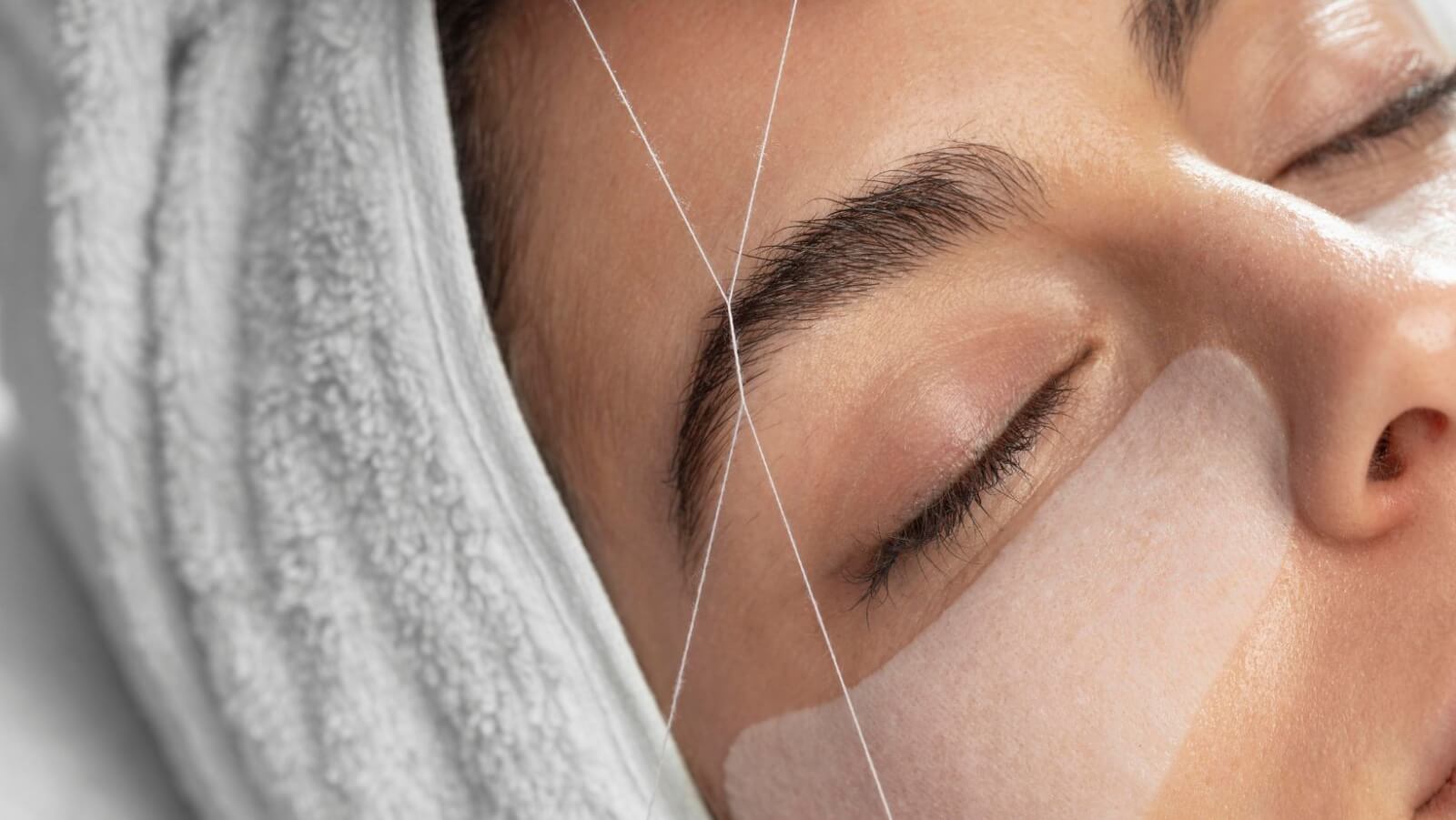
High precision; ideal for detailed shaping and sensitive skin types
- Tweezing:
Best for refinement and controlled removal during or post-service
- Waxing:
Efficient for bulk removal; requires caution with active ingredients (retinoids, exfoliants)
- Razor/Dermaplaning:
Suitable for surface cleanup; less structural impact
Best practice: Combine techniques where necessary for optimal results.
Execution Guidelines
Maintain discipline during shaping:
- Remove hair only outside the mapped structure
- Avoid aggressive work on the upper brow line unless necessary
- Trim conservatively and focus only on excessively long strands
- Continuously reassess symmetry from a distance
Workflow tip: Map → outline → remove → reassess → refine.
Common Professional Errors
Even experienced artists should remain mindful of:
- Over-thinning the lower brow line
- Creating harsh, overly geometric fronts
- Extending or lowering the tail excessively
- Ignoring natural asymmetry
- Over-trimming, leading to visible gaps
Reminder: Long-term brow health should take precedence over short-term sharpness.
Maintenance Protocols for Clients
Educate clients to maintain results between appointments:
- Light tweezing: every 1–2 weeks (guided)
- Professional reshaping: every 3–4 weeks
- Regrowth cycles: allow 6–8 weeks periodically for correction
Encourage minimal interference to preserve structure and density.
The Professional Standard
The hallmark of advanced brow work lies in restraint and intention. A successful brow should:
- Integrate seamlessly with facial anatomy
- Maintain softness without losing definition
- Enhance expression without appearing overworked
In contemporary beauty practice, the most refined brows are not the most visible, they are the most harmonious.
