
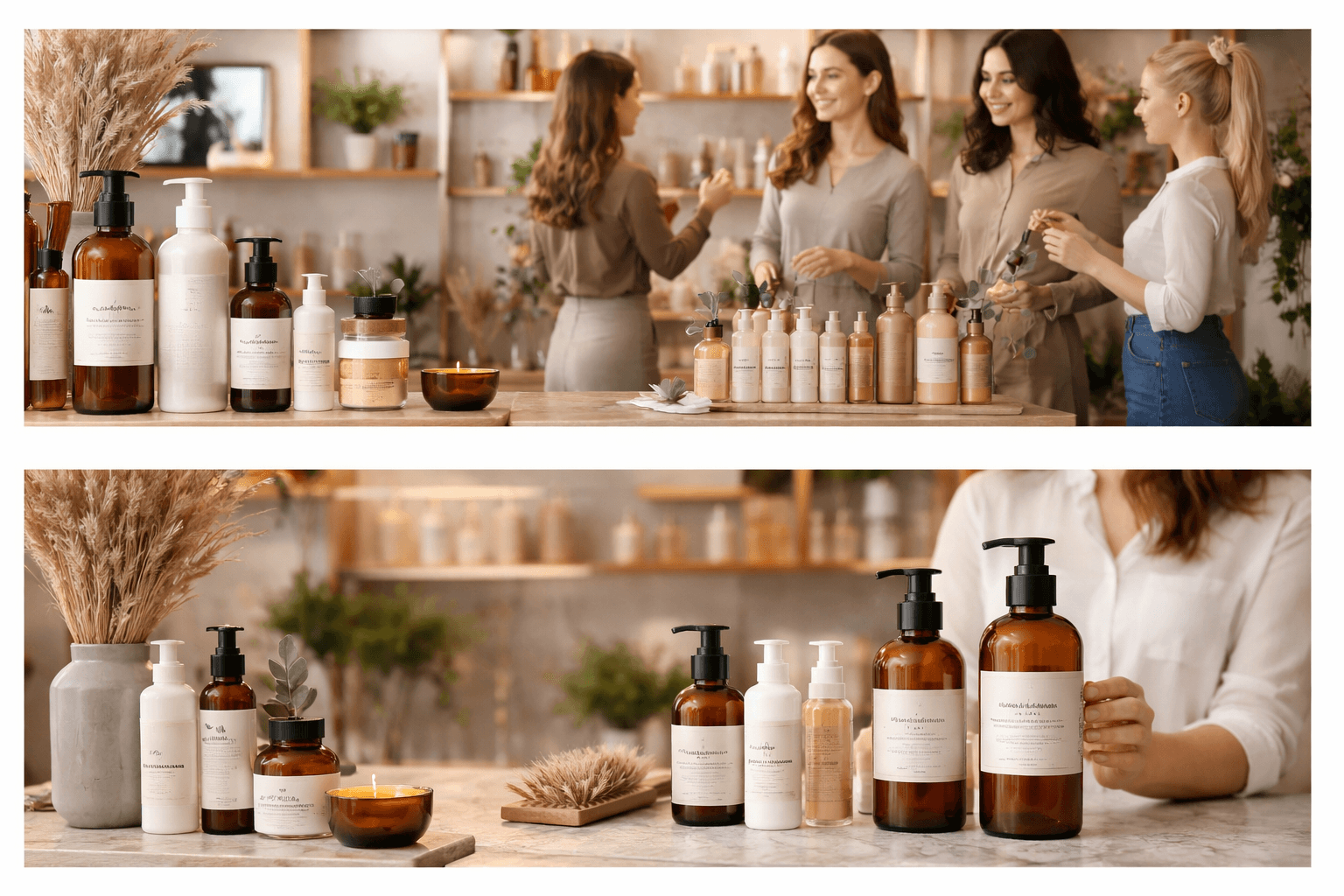
Private labels reshape salons driving margins, strengthen brand identity, and deepen client loyalty through controlled, personalised experiences. In an EXCLUSIVE interview with Priyanka Parshurami, Vikram Bhatt, Founder, Enrich and Anuprita Choudhary, Business Consultant-Salons and Aesthetic clinics spill beans on how salons use private labels to boost margins, strengthen brand identity, and drive client loyalty.
The Indian salon industry is entering a more controlled and strategic phase of growth. Beyond services and global brand associations, in-house product lines are emerging as a critical lever reshaping how salons approach profitability, differentiation, and long-term client engagement.
Margin Pressure Driving Private Label Adoption:
For Anuprita Choudhary, Business Consultant-Salons and Aesthetic clinics, the shift towards private labels finds its roots in economics. While services continue to deliver strong margins, retailing external brands offers limited upside due to restricted pricing control and lack of exclusivity. Competitors can easily replicate or substitute the same brands, diluting differentiation.
Private labels, therefore, become a strategic necessity, especially for multi-outlet salons offering stronger margins, ownership, and a distinct positioning that is difficult to copy.
Selling Begins Before the Service:
Anuprita emphasises that successful private label strategies are built into the service journey itself. Salons are now adopting diagnostic-led consultations, where hair and skin needs are assessed upfront and translated into structured regimes such as cleanse, repair, and protection.
The “mirror moment” is critical, where therapists explain and demonstrate products during the service rather than at billing. This creates sensory proof through touch and visible results, positioning products as personalised prescriptions rather than retail add-ons. Incentivising staff on retail performance further strengthens adoption and conversion.
Service Integration Over Retail Focus:
At Enrich, private labels are not positioned as a standalone retail play. Vikram Bhatt, Founder, Enrich, highlights that their current focus is on in-salon consumption across services like facials, waxing, and mani-pedi.
This approach enables tighter control over quality, consistency, and service outcomes. Rather than driving immediate retail revenue, private labels strengthen the core services business and elevate customer satisfaction through predictable, standardised experiences.
Balancing Global Partnerships with Owned Brands:
Vikram underscores a hybrid model where private labels coexist with global expertise. Enrich continues to partner with brands such as L’Oréal Professionnel and Kérastase in hair services, while leveraging in-house products for skin and body treatments.
This balance allows salons to combine global innovation with customised solutions tailored to Indian consumer needs, reinforcing both credibility and exclusivity.
Execution Challenges Remain Critical:
Despite its advantages, private labeling is operationally intensive. Anuprita points to challenges across sourcing, manufacturer selection, MOQ constraints, packaging, shelf-life stability, and regulatory compliance. Batch inconsistencies and supply chain gaps can directly impact trust.
Internally, stylist resistance and fear of client pushback towards lesser-known brands further complicate adoption. Additionally, inventory risks and working capital lock-ins require precise pricing and demand planning.
Driving Revenue, Retention and Brand Recall:
When executed effectively, private labels unlock three key growth levers. They increase ticket sizes by 20–30 percent through bundled service and homecare regimes, enhance customer lifetime value through repeat usage, and significantly improve margins due to exclusivity.
For salons, the shift is clear private labels are no longer just products on shelves. They are systems that drive consistency, build trust, and ultimately define a salon’s brand identity in an increasingly competitive market.
