


The beauty industry is experiencing a makeover, with a strong focus on environment-friendly packaging and waste reduction. This World Environment Day, Vidhi Arya from Professional Beauty India delves into this changing landscape and examines how several brands are taking a proactive approach to driving change.
The glitzy-gorgeous packaging is the first sweet spot for every consumer. However, most of the packaging, being non-decomposable, ends up in landfills. Beauty brands across the globe have been taking notes, and the landscape of packaging is shifting gears at warp speed!
For the beauty industry, shifting entirely to eco-friendly and decomposable packaging comes with several challenges. Eco-friendly materials often don’t provide protection and shelf life, risking product integrity. Additionally, transitioning to new packaging may entail substantial costs. Consumer perceptions and brand loyalty may also hinder the switch if eco-friendly options are perceived as less luxurious and less durable. However, despite these hurdles, progressive companies recognise the urgency of sustainable practices and are actively innovating. Let’s explore how.
A shift towards minimalism
Gone are the days of excessive plastic wrap and chunky boxes. The industry is slowly pivoting towards sustainability by ditching heavy boxes and plastic wraps and adopting smarter packaging designs.
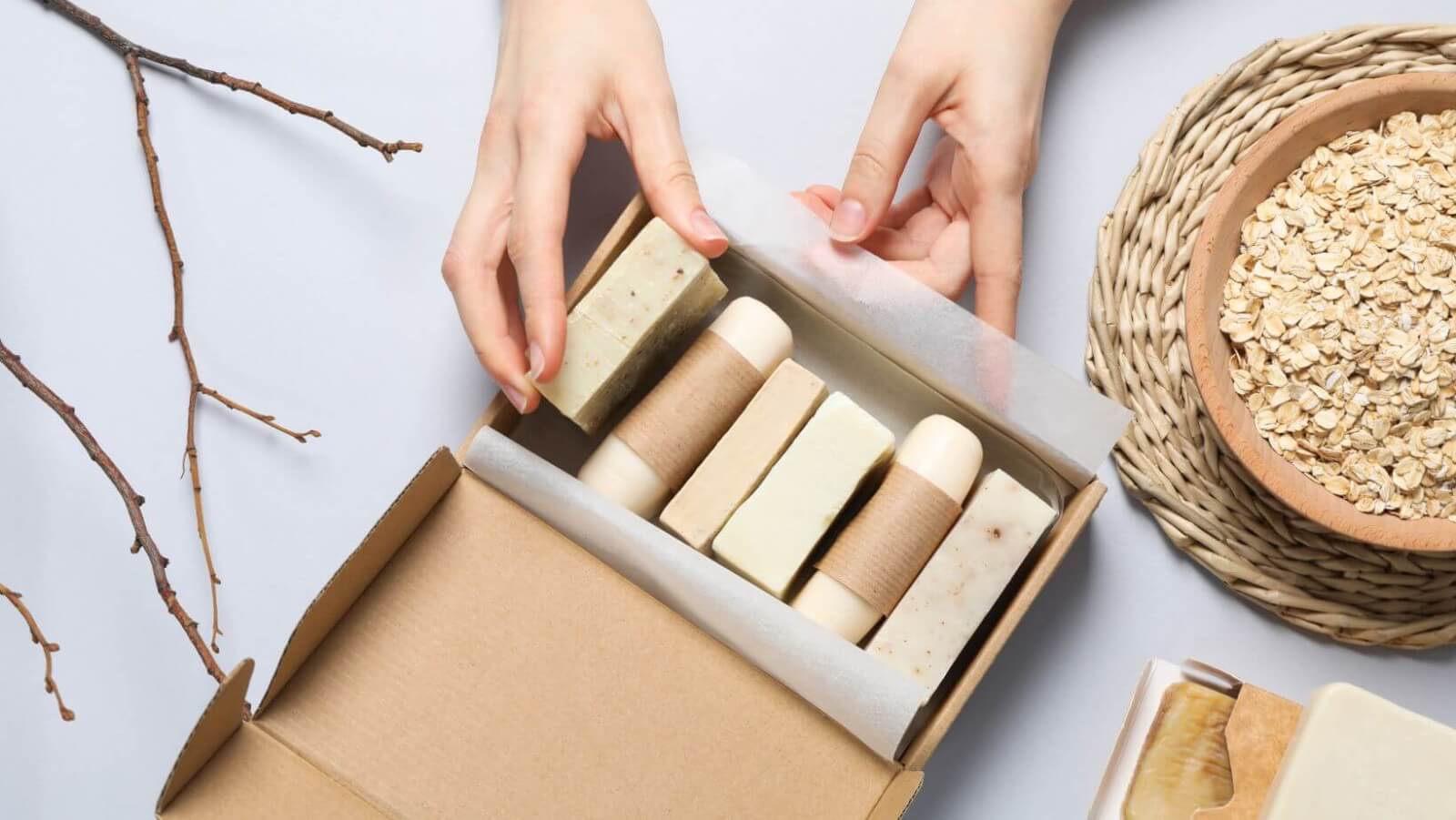
Lush’s famous bath bombs, shampoo and conditioner bars have pioneered the ‘naked’ product trend, promoting less waste with minimal packaging — also a clever marketing move. The brand says that its shampoo bar alone prevents the use of nearly 6 million plastic bottles annually.
Another brand making a mark with environment-friendly packaging is Tata’s Harper. Doing away with all paper or plastic labels, they opted for engraved bottles.
Mindful material choices
Traditionally, brands prefer plastic for packaging their products. One of the primary reasons for using plastic in packaging is for its cost-effectiveness. Additionally, it is versatile in terms of design and functionality. It can be moulded into different shapes and sizes. When packaging looks different, it is a way for a brand to stand out. It also provides a barrier that helps protect the product from contamination and moisture.
As brands have begun to understand the environmental impact of plastic and the need to switch to better options, changes are unfolding. From sustainable bamboo to glass to recycled plastics, the choices are readily becoming planet-friendly.
Brands like Bare Necessities, Kama Ayurveda, and Indulgeo Essentials use materials such as glass, aluminium tins, and cardboard boxes — materials that are reusable and non-contaminating.
Colorbar’s Vegan Nail Lacquer now uses bio-safe, eco-friendly and sustainable caps made of 50% wood to reduce and control plastic waste.
Similarly, Unilever’s Love Beauty & Planet range and Schwarzkopf Professional’s Igora Royal have both undergone an overhaul with sustainable packaging. The brands now have 100 per cent recycled aluminium tubes, and 100% recycled plastics for the bottles and caps. Schwarzkopf also uses a minimum of 92% recycled cardboard for the outside folding box. For its Bonacure range, Schwarzkopf Professional says, “Bonacure range has designed recyclable packaging that is made of up to 97% recycled plastic and uses 72% less plastic for caps.”
In an innovative step, a French cosmetics brand Zao, has all of its packaging made from the grass plant, bamboo. “All trees are carbon stores, but bamboo’s exceptional growth rate makes it a carbon capture champion during its life cycle. It allows Zao products to display a reduced carbon footprint.” states the brand.
The rise of refillable and reusable environment-friendly packaging
Embracing the eco-savvy trend, several brands are introducing refillable and reusable packaging options. Picture this: your favourite foundation or body wash in a reusable container that you can fill up again and again! Brands like L’occitane now offer refill packs for most of their body care products. The brand states that thanks to eco-refills, they save up to 80% of the plastic used for the original product. Leaping, in 2022, L’occitane has also installed refill stations in 10 stores across the UK and Ireland.
Cosmetic brands such as Raw Beauty Wellness, ASA Beauty, Fenti Beauty, and Colorbar now also provide refills for their cosmetics. So, if your lipstick runs out, you can purchase the refill and save the lipstick body from going into the landfill.
Empowering conscious consumerism
One way by which brands can change the approach of the customers to become environmentally conscious is through reward programs. More and more brands are promoting rewards for customers who participate in recycling the product bottles. Brands like Kiehl’s India and The Body Shop encourage sustainability with recycling and reward programmes. Customers can now recycle empty containers at stores, earning points for redemption later.
A brighter, greener future
Several brands have come forward with their sustainability goals to promote eco-friendly packaging and reduce their carbon footprints. Unilever has pledged to reduce its use of virgin plastic by 50% by 2025.
Further, Schwarzkopf Professional says “Building on our progress and activities in sustainable packaging, we continue to improve our packaging footprint in line with our new ambitious targets for 2025 with the vision of striving for 100% circular packaging by 2030. All our packaging will be recyclable or reusable by 2025.”
L’oreal has also pledged, “By 2025, 100% of our plastic packaging will be refillable, reusable, recyclable or compostable. By 2030, 100% of the plastic used in our packaging will be either from recycled or biobased sources (we will reach 50% in 2025).”
As we strive towards a more sustainable, eco-friendly, and waste-free future, the green glam revolution is shining a light on environment-friendly packaging practices, empowering many brands to set a precedent for global change.
